Folk / Jazz · 5 min read
John Martyn
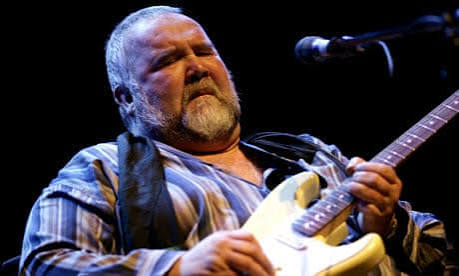
John Martyn could make an acoustic guitar sound like several different instruments without losing the feeling of someone sitting right in front of you. On “May You Never”, his playing has the ease of a tune he might have picked up halfway through a conversation. On “Small Hours”, the notes seem to drift in from a distance. Both songs have the same unmistakable voice: warm, rough around the edges and willing to let a word melt into the melody. That range is what makes Martyn so rewarding to explore. He came out of the folk clubs, but over four decades he found room in his music for jazz, blues, dub and soul.
Born Iain David McGeachy in New Malden, Surrey, in 1948, Martyn spent much of his childhood in Glasgow. He took up guitar at fifteen and started playing in Scottish folk clubs with encouragement from Hamish Imlach. He later moved into the London folk scene, playing at venues such as Les Cousins and signing with Island Records. His debut, London Conversation, arrived in 1967. A year later, The Tumbler brought jazz flautist Harold McNair into the picture. You can already hear a singer with an ear for what happens when another musician is given space to answer him.
His work with singer Beverley Martyn was an important part of that development. They released Stormbringer! and The Road to Ruin in 1970, and the two voices gave those records a character of their own. Stormbringer! was recorded in New York with musicians including Levon Helm of the Band. It also offers an early example of John’s use of the Echoplex, a tape delay that repeats what’s just been played. A guitarist can use it to add a faint trail behind a note. Martyn made those repeats part of the performance, playing against them as though there were another guitarist in the room. He traced that curiosity back to hearing the saxophonist Pharoah Sanders and wanting to give his guitar something of the same ability to sustain a sound.
On Bless the Weather in 1971, you can hear how comfortably straightforward songwriting and experimentation sat together for him. “Glistening Glyndebourne” lets the echoed guitar build up in layers, opening out into music that feels closer to an improvisation than a conventional folk song. His playing with double bassist Danny Thompson became another defining part of this period. Thompson’s bass has a voice of its own: it can steady the rhythm or move around Martyn’s phrasing, leaving enough room for both players to change direction. That interplay gives even some of the quieter recordings a sense of something being worked out as you listen.
Solid Air, released in 1973, is the natural place to start with his albums. Its title song was written for his friend Nick Drake, and there’s a softness to the performance that makes it feel like an attempt to reach somebody without crowding them. “May You Never” has a very different kind of tenderness. The guitar keeps moving under the vocal, and the song’s good wishes come across with the warmth of a friend seeing you off at the door. “Go Down Easy” takes its time, while “I’d Rather Be the Devil” brings out the darker, more unruly side of his playing. There’s a good deal more going on in Solid Air than its reputation as a late-night listen might suggest.
He followed it that same year with Inside Out, a record that leans further into improvisation. His voice can come loose from the words, and the guitar can wander well beyond the tune that seemed to be guiding it. One World, from 1977, uses some of that freedom to create a very different atmosphere. “Big Muff”, which he co-wrote with Lee “Scratch” Perry, brings out the rhythmic possibilities of dub. “Small Hours” is the one to put on when you have time to give it your full attention. The guitar echoes out into the open, and the silences are long enough for you to notice how each sound changes as it fades.
By Grace and Danger in 1980, Martyn was using a fuller electric sound to write about the breakdown of his marriage to Beverley. Phil Collins played drums on the record, and the arrangements draw as much from jazz and soul as they do from the folk music of his early years. “Sweet Little Mystery” is a particularly good example of how he could give a painful subject a melody you’d want to hear again. His voice had grown heavier by then, and it makes the song feel like an admission he’s coming to terms with as he sings it.
Martyn continued recording and performing long after that run of albums, and he spent his later years in Ireland. He died in Kilkenny on 29 January 2009, aged 60. His influence reached musicians as different as Eric Clapton, U2 and Portishead. You can understand why by following two threads through his records: the care he took with a simple melody, and his willingness to let a familiar instrument make an unfamiliar sound. Different listeners will come to him for different reasons, and there’s enough in his catalogue to reward both.
Start with these three songs: “May You Never” for the warmth and rhythmic touch of his acoustic playing, “Solid Air” for the way his voice and Danny Thompson’s bass leave room for each other, and “Small Hours” for the sound he could make when he let a few notes travel as far as they could go.
Watch John Martyn
John Martyn — video
Watch on YouTube ↗YouTube loads when you press play. Some videos may need to open on YouTube.
Start with these
- May You Never
- Solid Air
- Small Hours
Listening opens in your chosen service. Availability and subscription requirements may vary.
What do you think?
Join the conversation about John Martyn.
Loading comments…