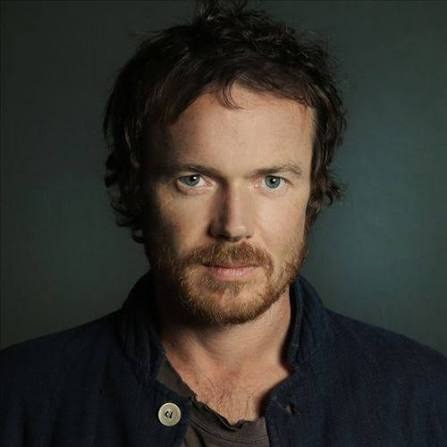
Image from TheFatLlama.net · Original artist feature
Folk · 4 min read
Damien Rice
Damien Rice makes music that feels close enough to hear the hesitation behind the words. The Irish singer-songwriter has a remarkable ability to turn a quiet melody into something emotionally overwhelming. A song might begin with little more than an acoustic guitar and a restrained vocal, then gather force until the feelings seem impossible to contain. Love, regret, desire and the difficulty of understanding another person run through his work, often tangled together in ways that resist easy answers.
Originally from Celbridge, County Kildare, Rice played in the band Juniper before establishing himself as a solo artist. His debut album, O, released in 2002, introduced a sound built around intimate songwriting, acoustic instruments and carefully judged arrangements. The recordings have a sense of closeness that allows small details to matter: the texture of a voice, the movement of fingers across strings or the silence following a difficult line. That attention to the performance helps give the album its lasting emotional weight.
Rice’s voice is central to the experience. He can sing with an almost conversational softness, making a lyric feel like something admitted reluctantly. When the intensity rises, his delivery becomes rougher and more exposed. The transition can be startling because it seems to follow the emotion wherever it leads. There is tenderness in his singing, but also impatience, anger and the exhaustion of returning to a thought that will not leave him alone.
“The Blower’s Daughter” captures that persistence through a spare arrangement and a vocal that gradually becomes more urgent. “Cannonball” approaches uncertainty more gently, allowing the melody and acoustic guitar to support a series of searching thoughts. “Delicate” carries the unease of a connection that might mean different things to the people involved. These songs draw much of their strength from leaving the listener inside the feeling, with enough space to recognise something personal.
Lisa Hannigan’s contributions were an important part of Rice’s early recordings and performances. Her voice could bring softness, distance or a different emotional perspective to a song, creating an exchange that made the words feel more complicated. The contrast between their voices gave certain passages the intimacy of a private conversation. Cello and other supporting instruments added further depth, sometimes gently surrounding the vocal and sometimes increasing the tension beneath it.
With 9, Rice explored a broader range of moods and more forceful arrangements. Songs such as “9 Crimes” show how effectively piano, repetition and the relationship between voices can build an atmosphere of guilt and uncertainty. Elsewhere, sharper guitars and a more confrontational delivery reveal the anger that can exist alongside affection. His writing allows people to be inconsistent, showing how someone can want closeness while behaving in ways that make it harder to achieve.
My Favourite Faded Fantasy gives his songwriting a wider musical setting. The arrangements often unfold gradually, using strings, layered instruments and changes in volume to support the emotional movement. The title track and “I Don’t Want to Change You” reveal different shades of longing, while the album as a whole gives its songs time to develop. Rice’s patience is part of his craft: he knows that a quiet passage can hold attention long enough for a later surge to feel powerful.
His music asks for a certain kind of attention. Some songs reveal themselves immediately through a memorable melody; others depend on the slow accumulation of detail. Repeated phrases can change meaning as the delivery shifts, and an instrumental passage can continue a thought after the words have stopped. That gives his work a sense of movement even when the arrangement is simple.
What makes Damien Rice distinctive is his willingness to stay with uncomfortable emotions. His songs recognise that affection does not guarantee understanding, and that knowing what went wrong does not always make it easier to let go. He gives those experiences a voice that can be fragile, demanding and deeply compassionate. Listening closely, you hear someone trying to reach the truth of a feeling, even when that truth is difficult to say aloud.
Watch Damien Rice
Cannonball
Watch on YouTube ↗YouTube loads when you press play. Some videos may need to open on YouTube.
Start with these
- The Blower’s Daughter
- Cannonball
- 9 Crimes
Listening opens in your chosen service. Availability and subscription requirements may vary.
What do you think?
Join the conversation about Damien Rice.
Loading comments…