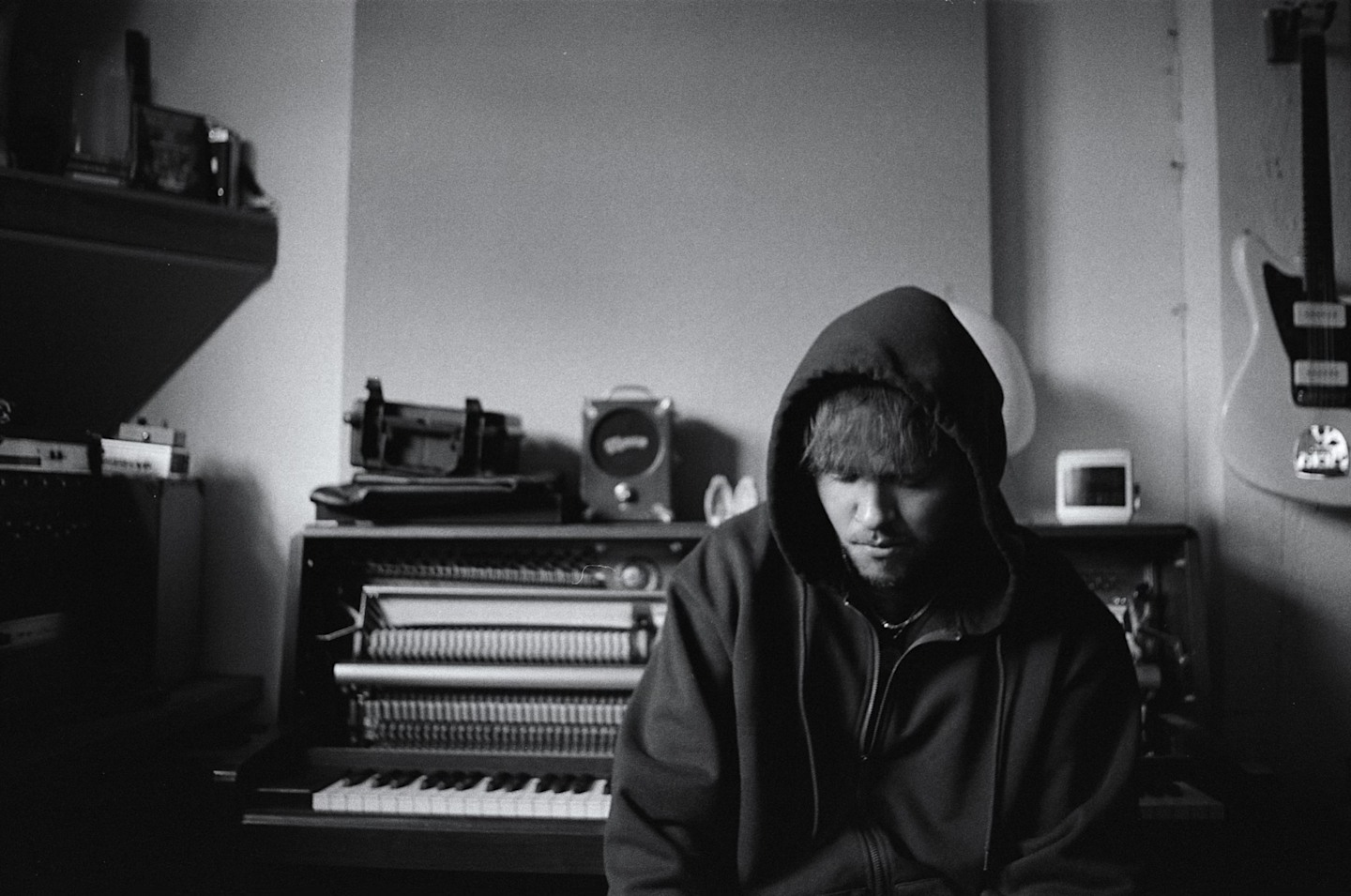
Photo source: The FADER
Alternative R&B · 6 min read
Ciarán
Ciarán is an Irish singer, songwriter, producer and multi-instrumentalist from Belfast, first widely known as bearface in BROCKHAMPTON. His music brings together alternative R&B, guitar-led songwriting and experimental production, with an expressive voice at its centre. He has a particular ability to make a performance feel intimate, even when the arrangement becomes expansive. After developing a devoted following through his work with the group, he has begun a new chapter under his own first name, releasing his debut solo album, “Róisín,” on 6 November 2026 through Ninja Tune.
His voice is an important part of what makes his music distinctive. A light, searching falsetto can give a song a fragile quality, while his lower register brings warmth and a more grounded emotional presence. The movement between those sounds allows him to suggest uncertainty, desire and tenderness without making every feeling explicit. His singing works closely with the production: layered harmonies, guitar textures and uneven edges can make a recording feel like an intimate thought taking shape. There is beauty in the melodies, but also an interest in leaving some of their roughness exposed.
Growing up outside Belfast, Ciarán encountered a wide range of music through his parents, from soul and hip-hop to more experimental pop and rock. He began playing guitar around the age of twelve and later started producing music on a computer. Before BROCKHAMPTON, he was already sharing sample-based recordings online, using SoundCloud and Bandcamp to put his ideas into the world. The bearface name began during that period, when he needed an identity for those uploads. His early development therefore involved both playing instruments and discovering what could be achieved through recording and production.
Within BROCKHAMPTON, he became a distinctive presence in a group built around many different personalities and approaches. Their music could be crowded, energetic and unpredictable, making his more reflective contributions especially noticeable. Songs such as “WASTE” and “SUMMER,” along with his part in “TEAM,” helped establish that role across the group’s SATURATION trilogy. His voice could change the emotional direction of a record, introducing a sense of stillness or longing after more restless passages. For many listeners, those moments became an essential part of the group’s identity.
There was a degree of independence within that role. Ciarán has explained that he often preferred recording privately, developing complete pieces before bringing them into the group’s work. “WASTE” emerged through that approach. It helps explain why his contributions could feel like entrances into a separate musical space while still belonging to the larger project. His strengths were already clear: a careful ear for melody, a sensitivity to atmosphere and the ability to give a song emotional weight through a relatively restrained performance.
Following BROCKHAMPTON’s breakup in 2022, his move towards a solo career took time. The gap allowed him to work out what he wanted his music to become outside the group. Returning as Ciarán also gave that transition a personal dimension. In interviews, he has discussed his earlier hesitation about using a name that some listeners might struggle to pronounce. Choosing it became a way to express more of his own identity, including his relationship with Belfast and his Irish background. A solo project offered room for subjects that had been harder to explore within a collective.
“K-Bar,” released in July 2026, introduced this new period. Its layered vocals and understated production retained the emotional closeness listeners associated with bearface while allowing Ciarán to establish a different setting around his voice. The song offered an introduction to an artist taking control of the whole picture: the sound, the presentation and the pace at which the work would reach people. It was followed by “Galvarino,” which brought guitar-based textures into conversation with R&B phrasing and a slower, more atmospheric approach.
His debut album, “Róisín,” brings these ideas together across thirteen tracks. The title has a family connection: his mother had intended to call him Ciara Róisín if he had been born a girl. Using that name places another part of his personal history within the project. Alongside songs such as “K-Bar,” “Galvarino” and “Houston,” the tracklist includes “Claddagh,” “White Leather” and “Waterslide,” forming the first full-length statement of this stage of his career.
The album moves between intimate vocals, guitar passages, distorted sounds and more dreamlike arrangements. Its appeal lies partly in how those elements interact. A tender melody can sit inside an unsettled recording, while a rough texture can make a quiet vocal feel more exposed. Collaborators including James Ivy, Roy Blair and D Chae contributed to the project, helping shape a record that draws from different musical directions while keeping Ciarán’s voice central. The result expands the range of settings in which listeners can hear him, beyond the role he occupied in BROCKHAMPTON.
His interest in artists such as Prince and D’Angelo provides useful context for that development. Both offer examples of how songwriting, instrumental character and vocal expression can become inseparable. Ciarán’s own work explores a similar freedom to move between guitar music, soul and production-led experimentation. The influence is most useful as a way of understanding his curiosity: he is interested in the possibilities of a performance, including its imperfections, and in finding arrangements that allow his particular voice to communicate more.
The live introduction to this chapter also suggested a broader ambition. In August 2026, he presented new material at a sold-out performance at Christ & St Stephen’s Church in New York, accompanied by a choir and a nine-piece band. That setting gave his music another scale, allowing songs developed through recording to become shared performances. For an artist whose reputation grew partly through intimate, solitary-sounding songs, it was a significant way to introduce the next stage.
Ciarán’s appeal comes from his ability to hold attention through emotional detail. He does not need to fill every space in a song; a change in vocal tone, a harmony or an unresolved guitar phrase can carry much of its feeling. His work as bearface introduced that sensitivity to a global audience. Róisín gives it a fuller setting, connecting the singer people already recognise with a songwriter and producer choosing how to present himself. It marks a new beginning with a clear connection to what made his earlier music resonate.
Artist background: Ciarán — official Ninja Tune artist page · Róisín — official album page
Watch Ciarán
Houston — Official Video
Watch on YouTube ↗YouTube loads when you press play. Some videos may need to open on YouTube.
Start with these
- K-Bar
- Galvarino
- Houston
Listening opens in your chosen service. Availability and subscription requirements may vary.
What do you think?
Join the conversation about Ciarán.
Loading comments…